


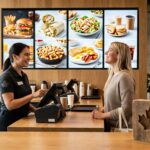

In commercial digital displays, AI is primarily used to drive content personalization and automate advertising. According to the 2026 digital signage trends, AI is being integrated in the following ways:
- AI-Driven Personalization: Systems use computer vision and sensors to analyze audience demographics—such as age and gender—in real time. The AI engine then instantly swaps creative content to match the viewer, such as changing a coffee promotion to a lunch special based on the time of day or the specific profile of a passerby.
- Behavioral and Contextual Adaptation: AI technology considers environmental factors like weather, current news headlines, and time of day to refine the displayed message. For example, a display might automatically promote hot beverages during a cold morning or raincoats when a weather feed signals rainfall.
- Programmatic DOOH Advertising: This involves automated platforms (DSPs and SSPs) that use data-driven algorithms to buy and sell ad space in real-time bidding auctions. This allows businesses to target specific demographics with high precision across digital billboards and public screens.
- Interactive Engagement: AI powers interactive capabilities like gesture recognition and touchscreens, transforming a static message into a two-way dialogue that increases customer dwell time and engagement.
Related FAQs
-
How Long do Uv-laminated Vinyl Decals Last Outdoors in the Prairies?
Read More »: How Long do Uv-laminated Vinyl Decals Last Outdoors in the Prairies?In the specific climate of the Prairies, the outdoor lifespan of a UV-laminated vinyl decal depends largely on the type of material selected: We specialize in providing weather-resistant vinyl decals specifically engineered for the Saskatchewan environment. By incorporating UV inhibitors…
-
What is the Cost of a Professional Decal Package for a Work Van?
Read More »: What is the Cost of a Professional Decal Package for a Work Van?Our professional decal packages for work vans typically start at approximately $800. However, because every project is unique, final pricing is determined by several factors, including the size of your vehicle, the percentage of coverage you select, and the specific…
-
How Much does it Cost to Install a Digital Menu Board System in 2026?
Read More »: How Much does it Cost to Install a Digital Menu Board System in 2026?We approach the cost of digital menu board installation as a value-focused investment tailored to your specific operational needs. In 2026, we offer three distinct installation packages to help Canadian restaurant owners plan their budgets: As a locally owned and…
-
What are the Benefits of Switching to Digital Menu Boards for Restaurants?
Read More »: What are the Benefits of Switching to Digital Menu Boards for Restaurants?Switching to digital menu boards offers significant strategic and operational advantages for restaurants, ranging from increased flexibility to enhanced visual appeal. As a locally owned and operated sign and graphic company in Regina, we have seen firsthand how these systems…
-
What is the Average Cost to Wrap a Ford F-150 for a Business?
Read More »: What is the Average Cost to Wrap a Ford F-150 for a Business?For a standard cab Ford F-150, the average total installed cost for a professional wrap typically ranges from $6,500 to $9,500 CAD. This estimate reflects the use of high-quality cast vinyl materials and includes the entire process from design and…